
School millwork is used hard. Hundreds of students use it every day, it is cleaned constantly, and it is expected to last for decades with little maintenance. Classrooms, science labs, libraries and offices each need something different. Here is what to plan and specify for each.
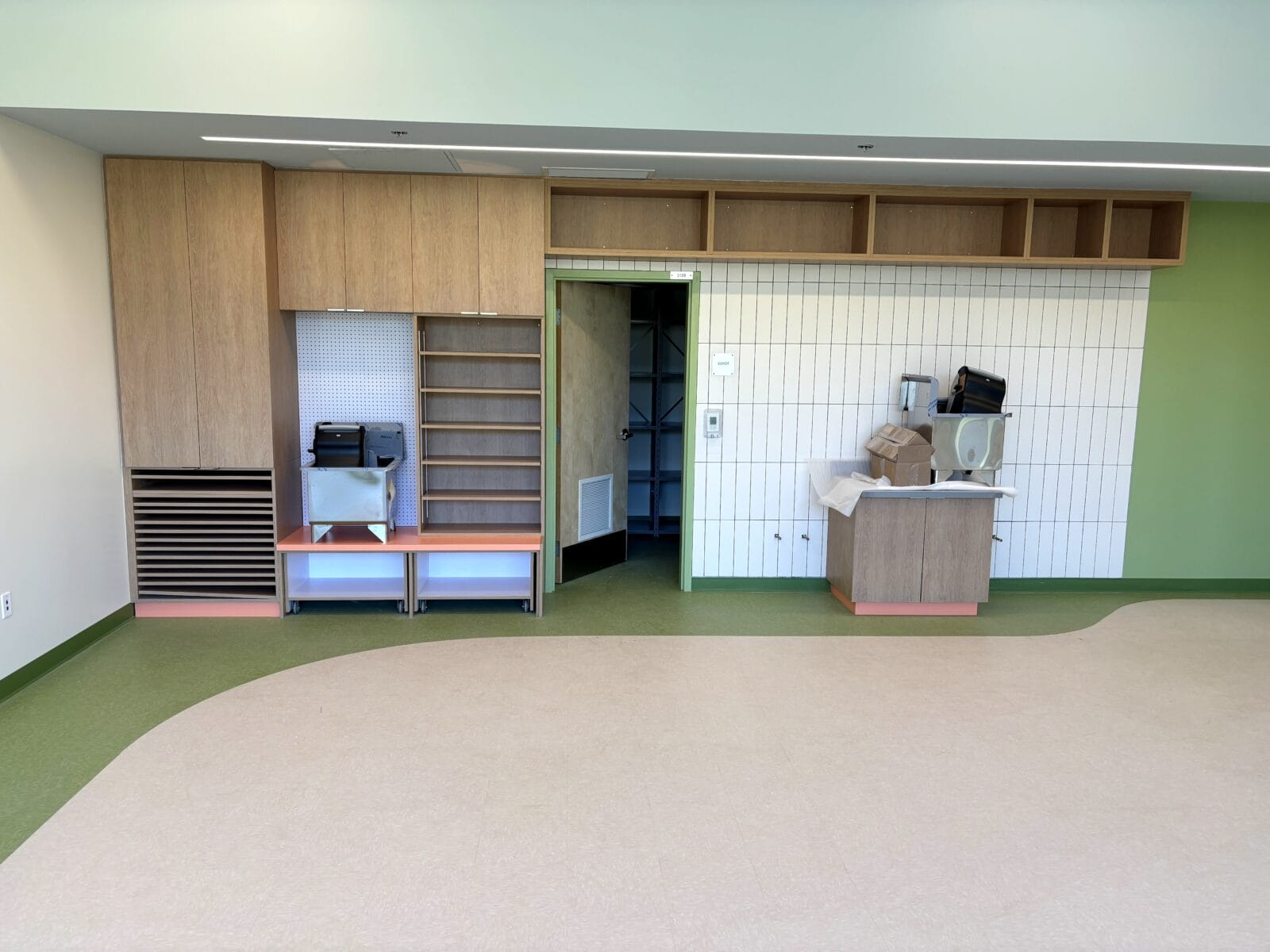
Classroom casework
- Teacher wall: tall storage, a teaching surface, and space for a sink in lower grades, often framed around a display board or screen.
- Student storage: cubbies, coat hooks and bins sized for the age group, low enough for students to reach.
- Sinks: classroom sink cabinets need moisture-resistant cores and durable tops; see our guide to cores for commercial millwork.
- Technology: charging carts or charging lockers for laptops and tablets need ventilation and power.
- Mobile storage: carts and rolling units let teachers reconfigure rooms, but need locking casters and stable proportions.
Built for durability
In Canada, architectural woodwork is usually specified to the North American Architectural Woodwork Standards (NAAWS), published by AWMAC and the Woodwork Institute; specifications typically call for the current edition at the time of tender. NAAWS grew out of the Architectural Woodwork Standards (AWS, 2nd edition), which recognized that schools are harder on millwork than offices: it designed shelves in schools, hospitals and libraries for a heavier load, 50 pounds per square foot, than the 40 used for general casework, and called for BHMA Grade 1 cabinet hardware on institutional work rather than the Grade 2 minimum. Confirm the values in the edition the project specifies. Many Canadian institutional specifications also require inspection under AWMAC’s Guarantee and Inspection Service. In practice, durable school casework uses:
- High-pressure laminate rather than low-pressure melamine on surfaces students touch; see laminate grades.
- 3 mm PVC edges or solid edges that resist chipping; see edgebanding.
- Heavy-duty hinges, full-extension slides rated for the load, and durable pulls; see our cabinet hardware guide.
- Rounded or eased edges and corners, especially in lower grades.
- Locks on teacher storage, and anti-tip anchoring for tall units.
Our article on quality grades explains how the grades affect construction and cost.
Science labs
Science classrooms and labs need casework and work surfaces that resist chemicals, heat and water. The Scientific Equipment and Furniture Association (SEFA) publishes standards that many lab specifications use. SEFA renamed its recommended practices as standards in late 2025.
- SEFA 8, issued in separate standards by casework material (for example 8-W for wood and 8-PL for plastic laminate), covers laboratory-grade casework, with load, drawer and door cycling and impact tests, and a test of the cabinet finish against 49 chemicals, including solvents, acids and alkalis.
- SEFA 3 covers work surfaces and sinks. Its chemical spot test exposes the surface to 49 reagents for 24 hours and rates each result from Level 0 (no effect) to Level 3, an objectionable change in appearance. A laboratory-grade surface should show no more than four Level 3 results. Testing is done by a third-party laboratory.
SEFA 3 covers a range of work surface materials, including epoxy resin, solid phenolic, high-pressure laminate, solid surface and stainless steel. Epoxy resin and solid phenolic are common in labs that use stronger chemicals; chemical-resistant laminate suits lighter use. Ask the school board which chemicals the lab will use, and compare surfaces on their published SEFA results. Fume hoods, eyewash stations, gas and specialized ventilation are designed by specialists and coordinated with the casework.
Libraries and learning commons
Library shelving is loaded heavily and evenly along its full length, which is why the heavier 50 psf shelf load applies. Long spans need thicker shelves, metal reinforcement or intermediate supports to keep shelves from sagging. Freestanding shelving needs to be stable, often by connecting units together or anchoring to the floor, and lower shelving in the middle of the room keeps sight lines open for supervision. The circulation desk is a service counter; in Ontario, new service counters need an accessible section under the province’s Design of Public Spaces Standards; see our cash wrap guide.
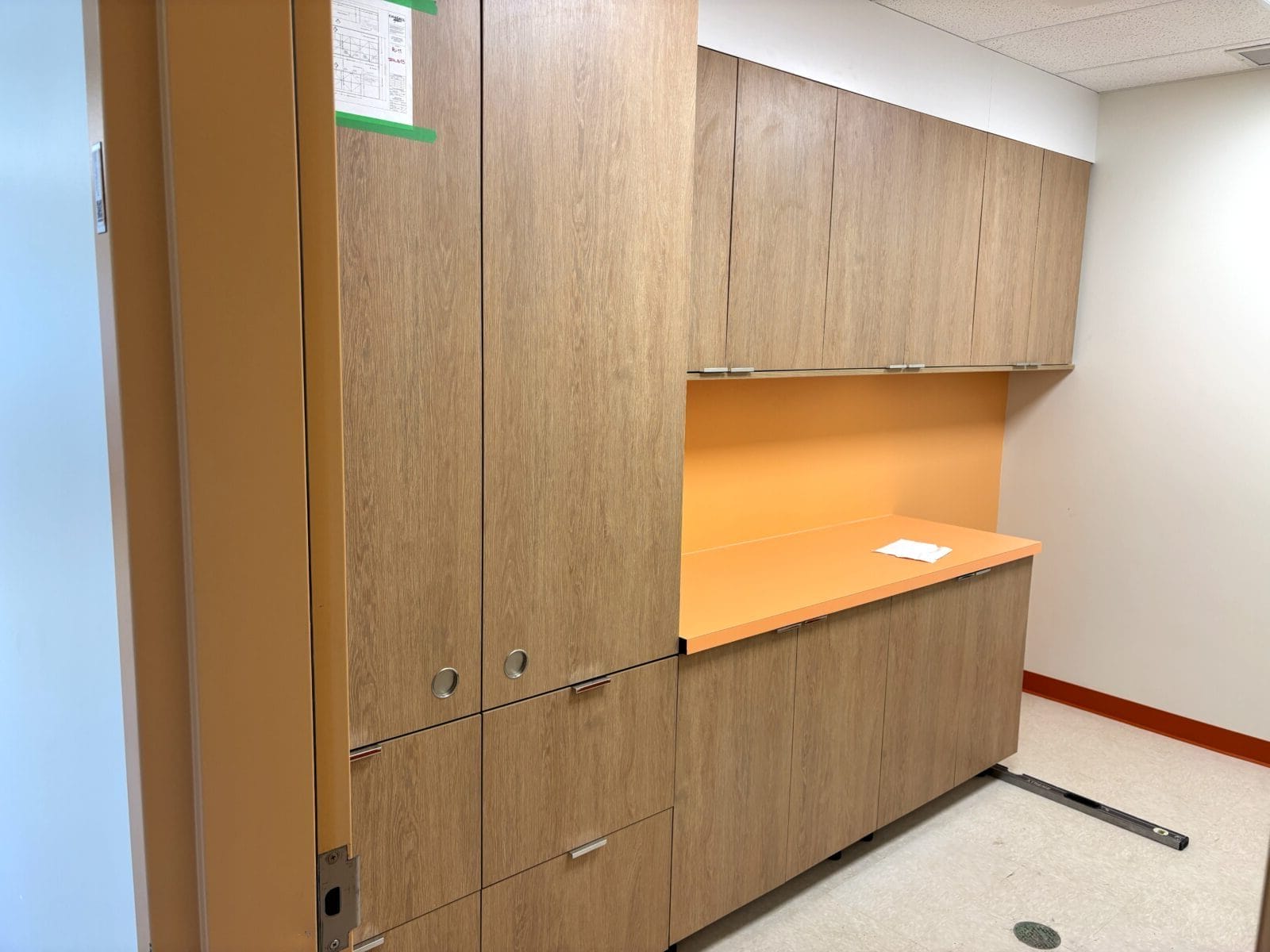
Offices, staff rooms and other spaces
The school office reception counter is also a service counter and needs an accessible section. Staff rooms and kitchenettes need the same moisture protection as any office kitchenette; see our guide to kitchenette millwork. Art rooms, music rooms, makerspaces and technology rooms each have their own storage needs, from flat files and drying racks to instrument storage and tool cabinets.
Indoor air quality
Composite wood products in casework emit small amounts of formaldehyde. In Canada, the federal Formaldehyde Emissions from Composite Wood Products Regulations, made under the Canadian Environmental Protection Act, limit those emissions, and many school boards go further and ask for no-added-formaldehyde (NAF) or ultra-low-emitting cores and low-VOC adhesives and finishes. Specify compliant cores and ask for documentation; see our article on sustainable millwork.
Scheduling around the school year
Most school millwork has to be installed during the summer break or another closure. That leaves a short window, so shop drawings, approvals and materials need to be settled well before school lets out, and production planned so casework arrives ready to install. See our article on millwork lead times.
What to put in the specification
- The standard and edition (typically the current NAAWS), the quality grade, and any shelf load, hardware and inspection requirements for institutional use.
- Surface materials and edges for each room type.
- For labs, the work surface material and the SEFA test results it must meet.
- Library shelving spans, loads and how freestanding units are stabilized.
- Accessible sections at service counters.
- Emissions requirements for cores, adhesives and finishes.
- The installation window.
School millwork at DNS
We build institutional millwork, including school casework, in our Vaughan plant. Our drafting team issues shop drawings for review before production, which helps lock in details early for a summer installation. See our school case study and institutional millwork, or send us your drawings.
Frequently asked questions
What shelf load should school casework be designed for?
The Architectural Woodwork Standards (2nd edition), from which the current North American Architectural Woodwork Standards developed, used a 50 pounds per square foot shelf load for schools, hospitals and libraries, compared with 40 for general casework, with shelf deflection limited to the span divided by 144. Confirm the values in the edition the project specifies.
What countertop is best for a school science lab?
It depends on the chemicals used. Epoxy resin and solid phenolic are common where stronger chemicals are used; chemical-resistant laminate suits lighter use. Compare surfaces on their SEFA 3 chemical resistance results, which test 49 reagents over 24 hours.
What is SEFA 8?
A family of standards from the Scientific Equipment and Furniture Association for laboratory-grade casework, issued separately by material, such as wood, plastic laminate, metal, phenolic and polypropylene. It includes load, cycling and impact tests and a test of the cabinet finish against 49 chemicals.
How do you stop library shelves from sagging?
Use shorter spans, thicker shelves, metal reinforcement or intermediate supports, and design to the heavier shelf load used for libraries. Library shelving carries heavy, evenly spread loads along its full length.
When is school millwork installed?
Usually during the summer break or another closure, so shop drawings, approvals and materials should be settled well before school ends and casework delivered ready to install.