Lead times for custom commercial millwork and store fixtures are project dependent. The schedule turns on drawing approvals, materials, quantity and finishes. DNS gives a schedule with each quote, planned back from your opening date.
The timeline, stage by stage
A fixture program isn’t one step — it’s a chain, and each link has its own clock.
- Design & drafting — turning a concept or architect’s design into a buildable package: drafting for manufacture, material selection, value engineering.
- Shop drawings & approval (plus your review) — detailed drawings go to the architect/GC for sign-off. This is the stage clients most often underestimate — every round of revisions adds time, so fast, clear feedback protects your opening date.
- Material procurement (overlaps other stages) — standard materials are quick; specialty veneers, solid surface, stone, or custom metal can add lead time. Ordering early matters.
- Fabrication — CNC machining, casework in our plant, with metal and glass components from partners we coordinate. Complexity and quantity drive this most.
- Finishing — paint, stain, laminate and hand-finishing in house; powder coating through partners.
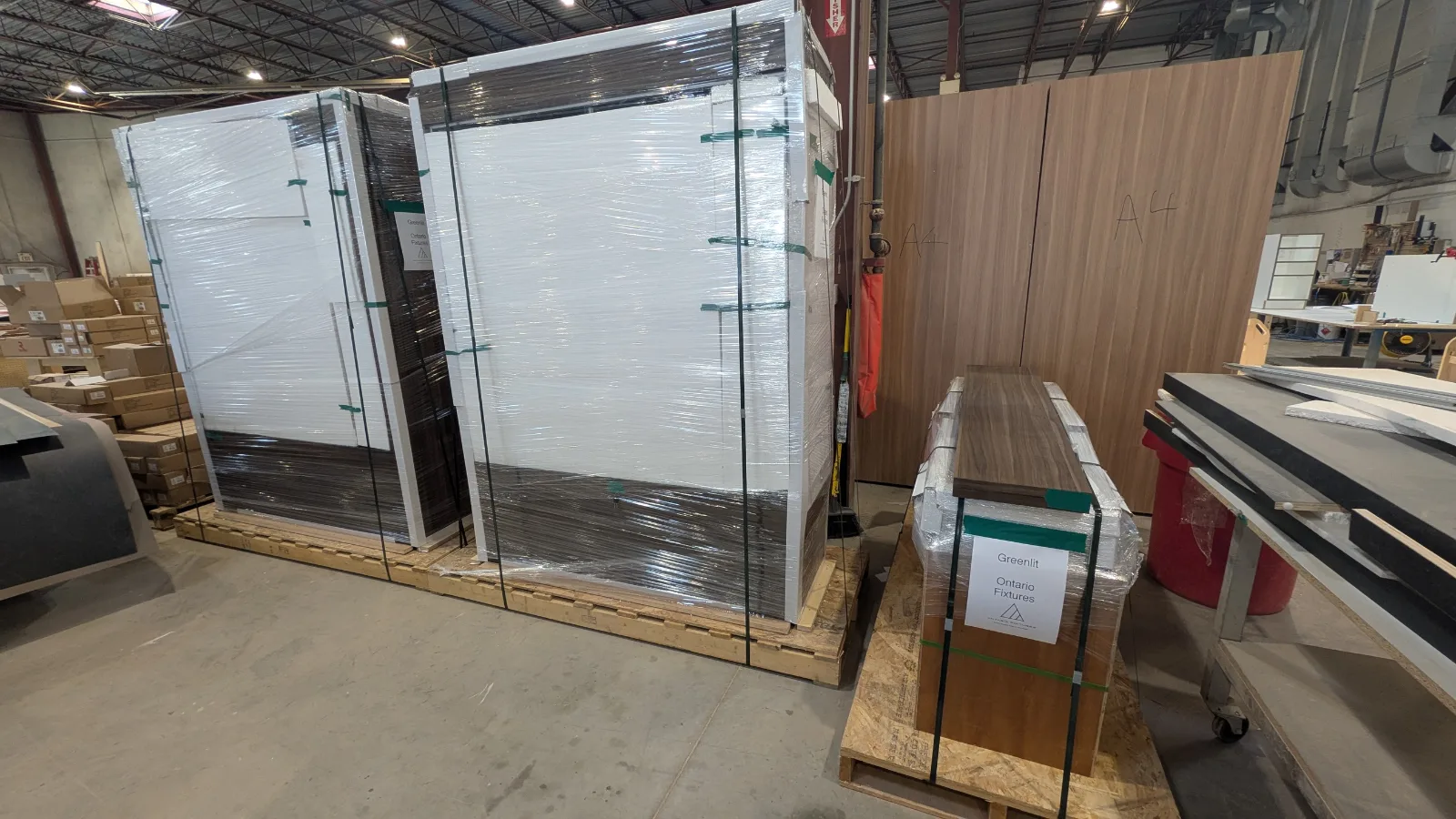
- Staging, QC & delivery — assembled, quality-checked, and staged before shipping. For rollouts, fixtures are kitted and sequenced per location.
What makes it faster — or slower
- Faster: early engagement, quick drawing approvals, standard materials, repeat/production runs.
- Slower: compressed “rush” schedules, specialty finishes, many revision rounds, and starting the fixture vendor late.
Timeline and cost move on many of the same factors — complexity, materials, and quantity — so it pays to scope both early.
How far ahead should you order?
For a single store, engage a fabricator as early as you can, ideally while the design is still being finalized. For a multi-location rollout, start several months ahead — a pilot unit is built and approved first, then production and staged delivery scale to your opening calendar.
The rollout advantage
On multi-location programs, the first store carries the drafting time; every store after it is faster and cheaper because the package is already proven. That’s why treating a rollout as a program (pilot → standardize → scale) beats quoting each store cold.
DNS drafts, fabricates, finishes and stages millwork and fixtures from its Vaughan plant, which keeps the whole timeline under one accountable team, with no handoffs to lose weeks in.
See also: retail store fixtures for Toronto and the GTA, commercial millwork in Toronto and store fixtures for US brands opening in Canada.
Related reading: store fixture installation checklist and retail rollout programs.
Frequently asked questions
How long does store fixture and millwork fabrication take?
Lead times are project dependent. Drawing approvals, materials, quantity and the finish schedule move the timeline most, and DNS gives a schedule with each quote, planned back from your opening date.
How far in advance should I order fixtures for a store opening?
Engage a fabricator as early as you can, ideally while the design is still being finalized. For a multi-location rollout, start several months ahead so a pilot unit can be built and approved before production scales.
What slows down a store fixture project?
Compressed rush schedules, specialty finishes, multiple drawing-revision rounds, and engaging the fabricator late in the project all extend timelines.
Planning an opening or rollout? Send us your drawings for a timeline →