
Beauty fixtures have to serve several purposes at once. Customers need to see, touch and try products, often in front of a mirror, while staff need to restock, clean and keep small, valuable items secure. Testers spill, lighting has to show true skin tones, and brands refresh their look often. Here is what to plan for skincare, cosmetics, fragrance and personal care stores.
Wall units and gondolas
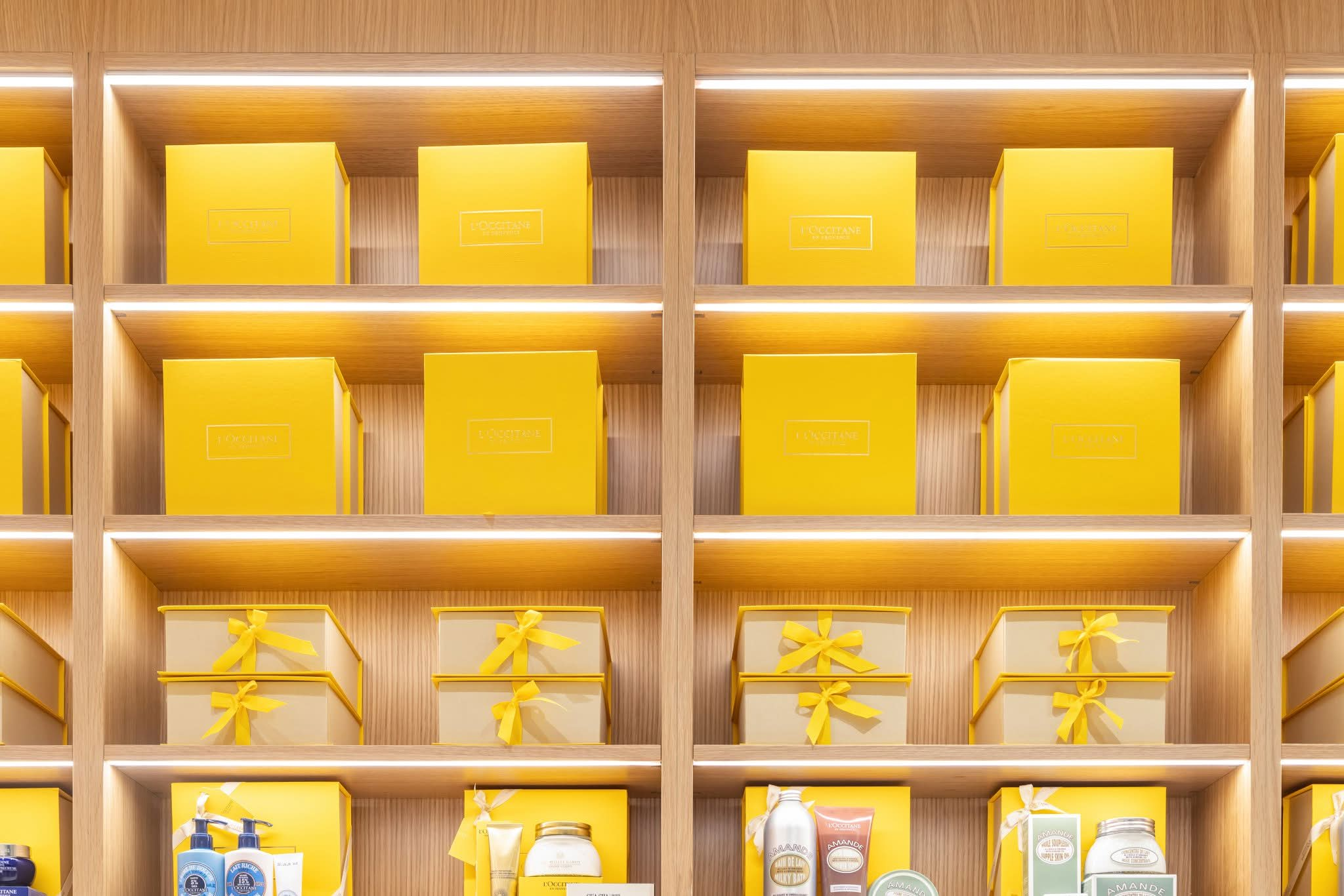
Most beauty stores are built around wall units organized by brand or category, with gondolas or tables on the floor. Wall units usually combine:
- Tester trays at reach height, often removable for cleaning, with a lip to stop product rolling off.
- Stock below or behind, in drawers or behind lockable doors, so staff can restock without leaving the floor.
- Graphic panels above, designed to be swapped as campaigns change.
- Integrated lighting that lights the product, not the shopper’s eyes.
Shelves and tester inserts are often sized to a brand’s packaging, so get product dimensions early and allow for packaging changes over the life of the fixture. See our overview of types of retail store fixtures.
Mirrors and lighting
Shoppers try colour on their skin, so lighting near mirrors and testers has to show skin tones accurately. Choose LEDs with good colour rendering, and light faces from the front and sides at mirrors rather than from directly above, which casts shadows. Keep the colour temperature consistent across the store so a shade looks the same at the tester as at the checkout. Lit millwork is electrical equipment, so agree early with the electrical consultant how it will be approved and connected.
Sinks and service stations
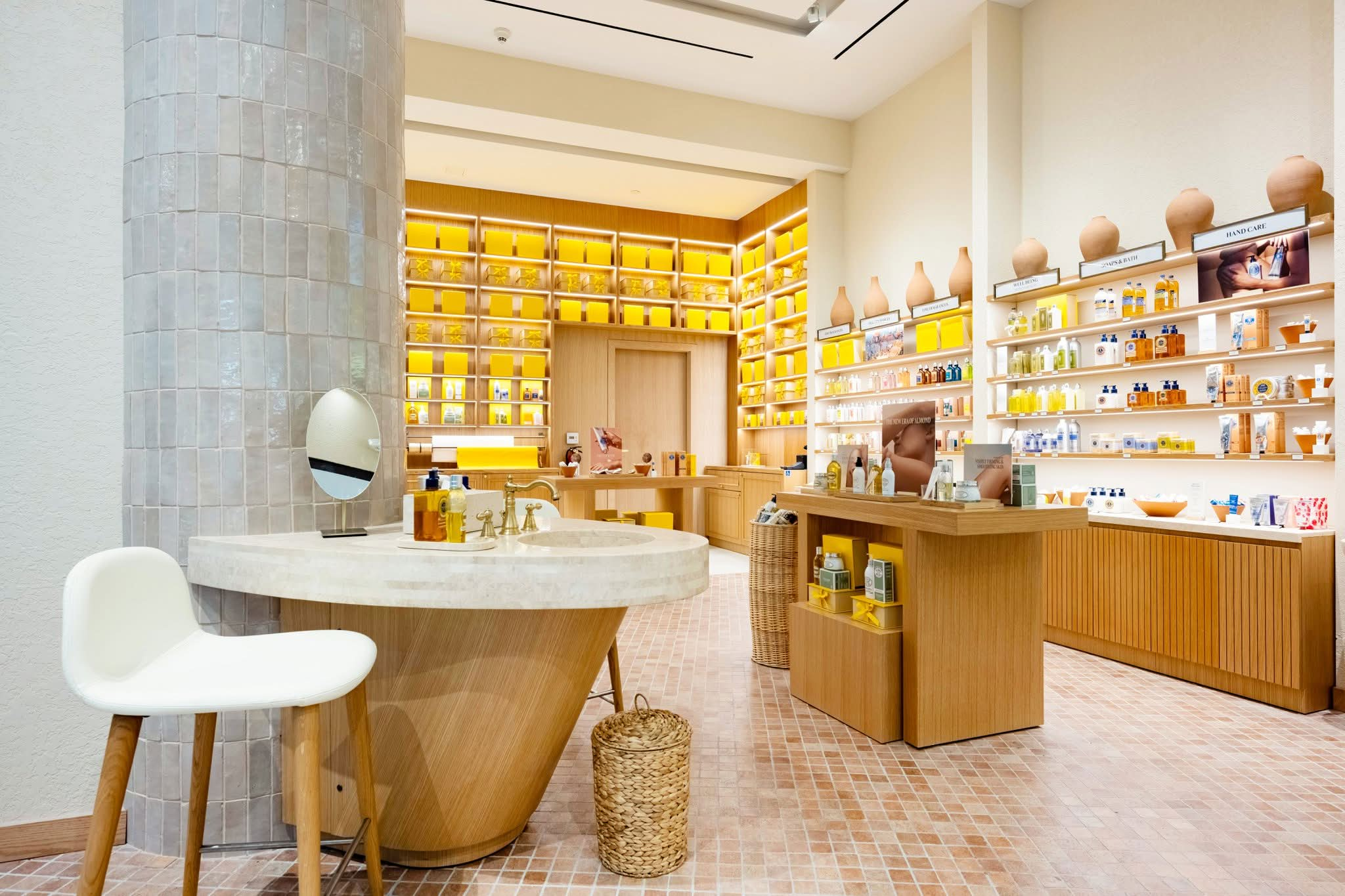
Skincare and makeup brands often include a sink so customers can try products and wash them off, and service areas for makeovers, brow or skin treatments need stations with chairs, mirrors, storage and power for tools. Sinks bring plumbing, so plan the location early with the landlord and plumber. Solid surface works well around sinks because it is non-porous and can include an integrated basin and backsplash; see solid surface vs quartz. Use moisture-resistant cores in sink cabinets; see cores for commercial millwork.
Materials that resist stains
Makeup, oils, fragrance and nail products stain and can attack some finishes. Test surface samples with the actual products the store sells and with the cleaners staff will use. Practical choices include:
- Non-porous tops at tester areas, such as solid surface, compact laminate or chemical-resistant laminate. Standard high-pressure laminate resists many products, but test it with nail polish remover, fragrance and oils before choosing it for heavy-spill areas.
- Removable, washable tester trays and inserts.
- Finishes and edges checked against alcohol-based fragrances, solvents and oils.
See our guide to caring for millwork surfaces and our article on laminate grades.
Product security
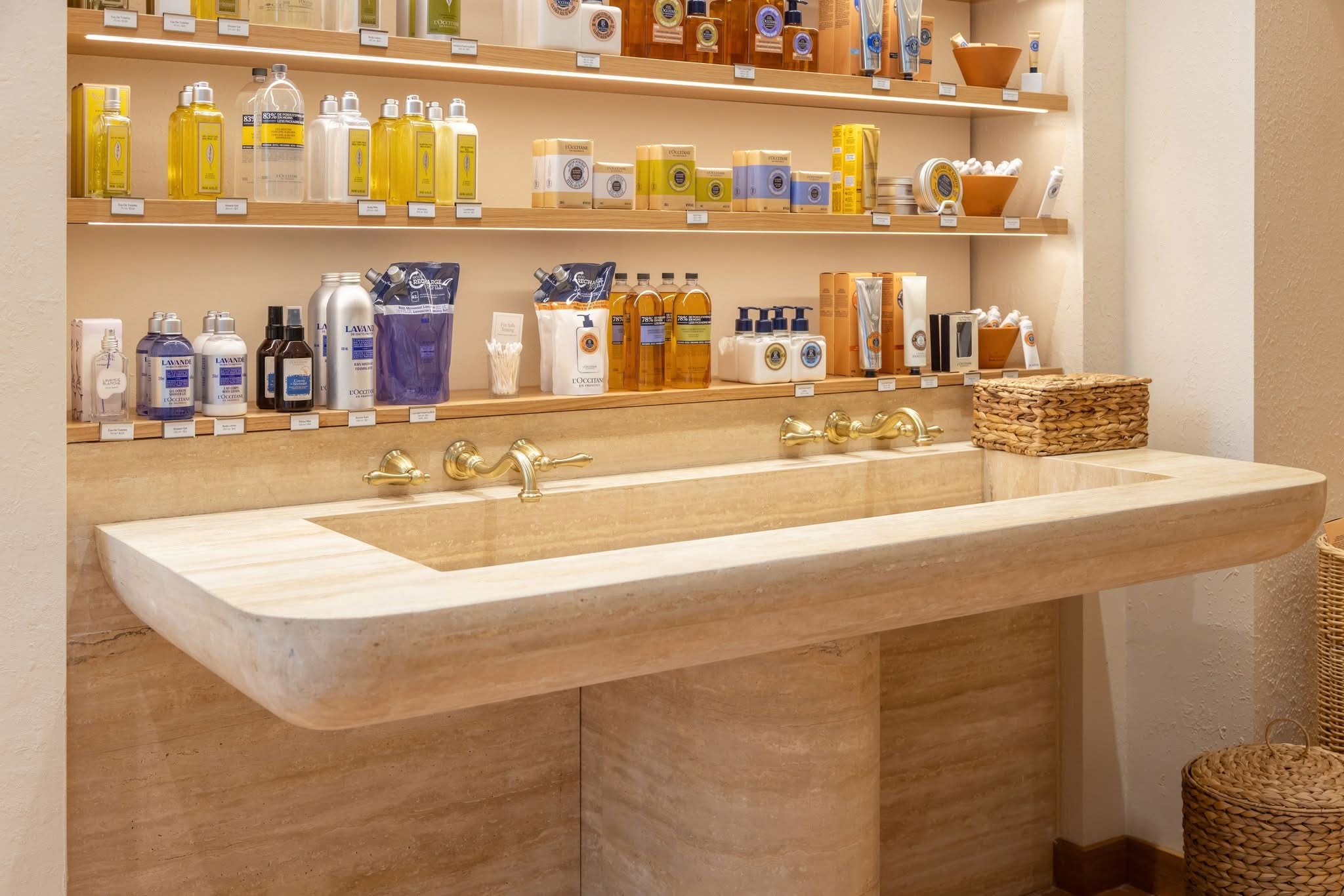
Many beauty products are small and valuable. Common approaches are display-only testers with stock kept locked below, lockable display cases for premium items and fragrance, sight lines from the cash desk to the high-risk walls, and space for electronic article surveillance at the entrance. Fragrances and aerosols are flammable, and the fire code can limit how much is displayed and stored, so check large fragrance displays with the fire protection designer. Plan lockable storage and locks into the fixtures from the start; see our cabinet hardware guide and display case design.
Cash desk and gift wrap
Beauty cash desks often include gift wrap, bags in several sizes, and a small display of impulse items. In Ontario, new service counters fall under the province’s Design of Public Spaces Standards, which call for at least one accessible counter for each type of service; see our cash wrap guide.
Shop-in-shops and rollouts
Beauty brands often sell through shop-in-shops inside department stores and pharmacies, where the host store sets rules on footprint, height, lighting and power. Fixtures for these programs need to be consistent across locations, quick to install, and designed so graphics and inserts can be updated without replacing the fixture. Kitting by location makes installation predictable; see our guide to shipping fixtures for rollouts and our L’Occitane program case study.
What to give your fixture manufacturer
- Product dimensions for testers and stock, by brand or category.
- Lighting design, including colour rendering and colour temperature.
- Sink and service station locations and plumbing.
- Products and cleaners the surfaces must resist.
- Security requirements for each fixture.
- Host store or landlord criteria for shop-in-shops.
Beauty fixtures at DNS
We build beauty and specialty retail fixtures in our Vaughan plant, with CNC cutting, finishing and solid surface in-house, LED integration coordinated to project requirements and jurisdiction, and partners for metal and glass. Our drafting team issues shop drawings for review before production, and we kit fixtures by store for multi-location programs. See retail store fixtures for brands, or send us your concept.
Frequently asked questions
What lighting is best for cosmetics displays?
LEDs with good colour rendering, a consistent colour temperature across the store, and light on faces from the front and sides at mirrors rather than from directly above, so skin tones look accurate.
What countertop material suits a beauty store sink?
Solid surface is a common choice because it is non-porous and can include an integrated basin and backsplash. Sink cabinets should use moisture-resistant cores.
How do you keep cosmetics fixtures clean?
Use non-porous tops at tester areas, removable and washable tester trays, and finishes tested against the products sold and the cleaners staff use.
How are beauty products secured in store fixtures?
Display-only testers with stock locked below, lockable display cases for premium items and fragrance, sight lines from the cash desk, and space for electronic article surveillance at the entrance.
What do shop-in-shop fixtures need?
They must meet the host store’s rules on footprint, height, lighting and power, be consistent across locations, install quickly, and allow graphics and inserts to be updated without replacing the fixture.