Since Ontario opened beer, wine, cider and ready-to-drink sales to convenience stores and all grocery stores in 2024, many stores have had to fit alcohol into layouts that were never planned for it. The Alcohol and Gaming Commission of Ontario (AGCO) sets rules for how licensed stores sell and store these products, and several of those rules shape the fixtures. Here is what they mean for displays, coolers, storage and the checkout.
Locking product outside the hours of sale
Alcohol can be sold in grocery and convenience stores only between 7:00 a.m. and 11:00 p.m., and the AGCO’s guides say beer, wine and ready-to-drink products must not be available outside those hours. Stores that stay open longer have to make the product unavailable. The guides give examples of how to do it:
- locking the refrigerators that hold the products;
- creating a partition around the display aisles;
- locking the point-of-sale system.
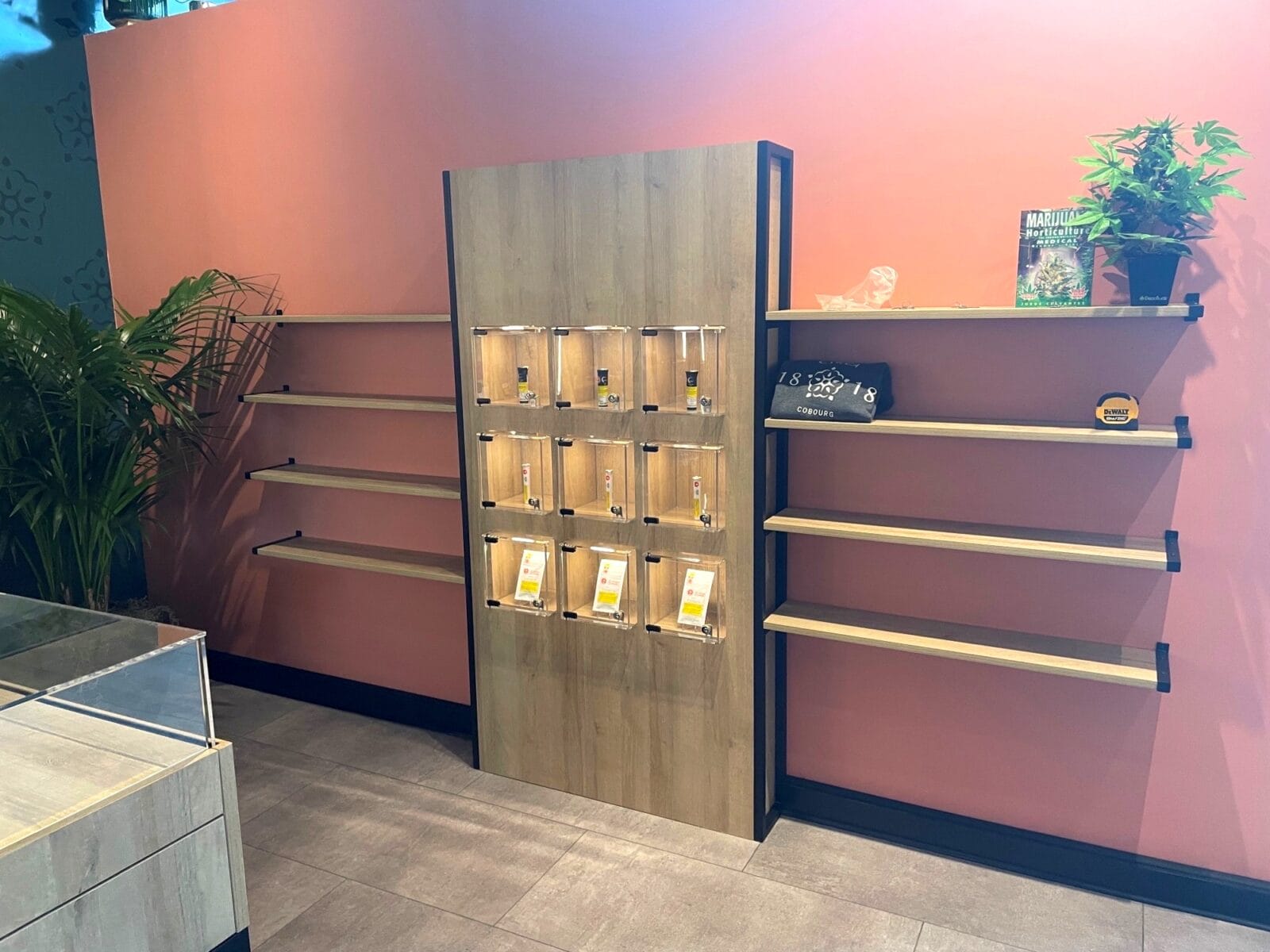
The AGCO leaves it to each store to decide how best to meet the requirement. For stores open around the clock, a physical solution is usually the clearest: lockable cooler doors, lockable gates or grilles across a dedicated alcohol aisle, or lockable doors on wine shelving. A POS lock alone relies on staff refusing sales at the counter, so it can be combined with a physical barrier. Plan the barrier with the fixtures from the start, because gates and grilles need a contained area to close off, and fixings in the floor, walls or ceiling.
Giving alcohol its own zone
A dedicated alcohol area makes after-hours locking simpler, and helps with the AGCO’s display rules. Products that promote excessive drinking cannot be displayed immediately next to alcohol, and other products may share a display with alcohol only when they are there for cross-promotion. A defined zone with its own shelving, coolers and end caps keeps the planogram clean and makes it easier for staff to check compliance. Grocery stores that offer samples must do so in a designated area within or next to the alcohol display, which can be a small counter or table built into the zone. Convenience stores are not permitted to offer samples.
Shelving that can change
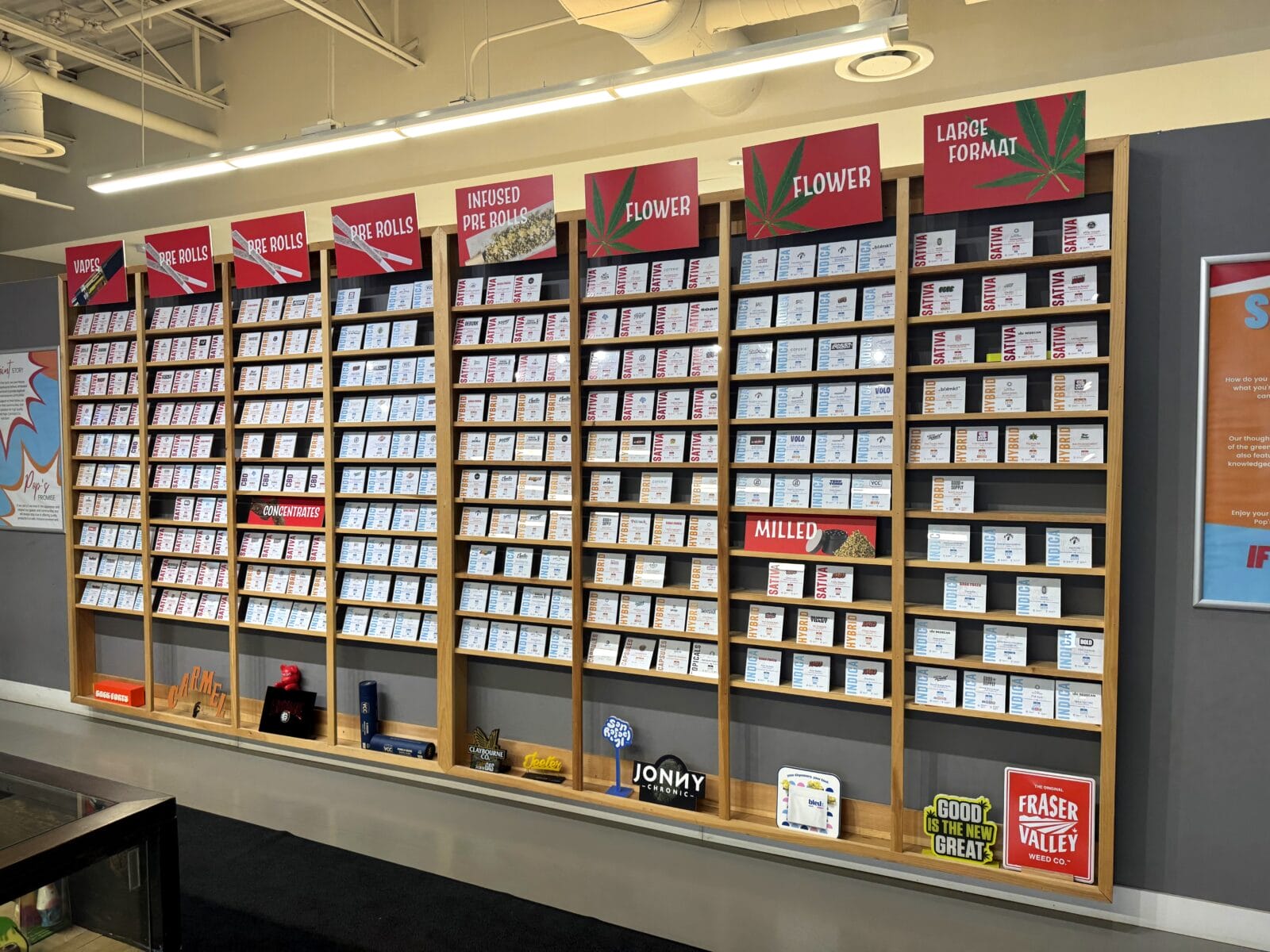
The AGCO sets minimum shares of products from small producers: at least 20 percent of beer, cider and ready-to-drink containers on display, and at least 10 percent of wine containers, with a further wine requirement for grocery stores. These are counts of containers, not floor space, but they mean the product mix will shift over time. Adjustable shelving, interchangeable shelf dividers and price channels make it easier to rebalance the display without new fixtures. See our article on slatwall, gridwall and pegboard for flexible wall systems.
Wine displays
Wine is easier to shop when it is organized by type and region. Common fixtures include wall shelving with angled or flat bottle shelves, gondola runs, island tables for features and seasonal products, and lockable cases for premium bottles. Bottles are heavy, so shelf spans and supports should be specified for full loads; see our cabinet hardware guide and our article on types of retail store fixtures. Lit millwork is electrical equipment, so agree early with the electrical consultant how it will be approved and connected.
Coolers
Most beer and ready-to-drink products are sold cold. Reach-in coolers and walk-in coolers with glass doors come from refrigeration suppliers, but the millwork around them, such as surrounds, header signage, end panels and bases, is often custom. Coolers need space for ventilation and service, so follow the refrigeration supplier’s clearances, and check that cooler doors can be locked if that is how the store will meet the hours rule.
Secure storage for back stock and online orders
Alcohol that is not on display, including back stock, online orders waiting for pickup and orders waiting for delivery, must be kept in a secure area that customers cannot reach. In practice that means a locked stockroom, a lockable cage, or lockable pickup cabinets behind the counter. If the store offers online ordering, plan where pickup orders will wait and how staff will hand them over without customers reaching the secure area.
Signs at the checkout
Licensed stores must post their licence somewhere conspicuous, such as a customer service counter or checkout, and display the Sandy’s Law warning about drinking during pregnancy where alcohol is purchased, such as at the cash register. Leave space for both in the checkout design.
Empty containers also affect the layout. The AGCO’s grocery guide says that from January 1, 2026, grocery stores must accept empty alcohol containers unless they have an approved arrangement with The Beer Store, in which case they post a sign giving the nearest return location. Convenience stores must post where empties can be returned. Confirm which applies to the store, and plan space for a returns area if it will take empties back. If checkout counters are new, Ontario’s accessible service counter requirements also apply, with at least one accessible counter for each type of service; see our cash wrap guide.
Check the current rules
The AGCO’s guides note that they do not replace the law, and the rules for grocery and convenience stores have changed several times since 2024. Check the current regulations, the Registrar’s Standards for Grocery and Convenience Stores and your licence conditions before fixtures are ordered.
What to settle before fixtures are designed
- How the store will make alcohol unavailable outside the hours of sale.
- Where the alcohol zone goes, and how it can be closed off.
- Shelving, cooler and wine display layout, with flexibility for the product mix.
- A sampling area, if a grocery store will offer samples.
- A returns area for empty containers, if the store will accept them.
- Secure storage for back stock and online orders.
- Checkout space for the licence, warning sign and deposit-return sign.
Beer and wine fixtures at DNS
We build custom wine displays, lockable cabinets, cooler surrounds and store fixtures in our Vaughan plant, with LED integration coordinated to project requirements and jurisdiction, and work with partners for metal gates, grilles and glass. Our drafting team issues shop drawings for review before production, and we kit fixtures by store for multi-store programs, ready for installation by your general contractor or our installation partners. Send us your floor plan to start.
Frequently asked questions
How do Ontario grocery stores lock up alcohol after hours?
The AGCO’s guides say beer, wine and ready-to-drink products must not be available outside 7:00 a.m. to 11:00 p.m., and give examples such as locking the refrigerators, partitioning the display aisles, or locking the point-of-sale system. Stores decide how best to meet the requirement, and a POS lock can be combined with a physical barrier.
Where must alcohol back stock be kept in a grocery or convenience store?
In a secure area that customers cannot reach. That applies to alcohol not on display, online orders waiting for pickup and orders waiting for delivery.
Can other products be displayed next to beer and wine?
Products that promote excessive drinking cannot be displayed immediately next to alcohol, and other products may share a display with alcohol only for cross-promotion, according to the AGCO’s guides.
What signs are required at the checkout for alcohol sales?
The store licence must be posted conspicuously, such as at a customer service counter or checkout, and the Sandy’s Law pregnancy warning must be displayed where alcohol is purchased. Convenience stores, and grocery stores with an approved Beer Store arrangement, also post where empty containers can be returned.
Does the AGCO set a size for the alcohol display area?
The AGCO’s grocery and convenience store guides do not set a display area size or fixture specifications. They set minimum shares of products from small producers, counted by containers on display, so flexible shelving helps.