
Wood veneer gives millwork the look of solid wood for less cost and with better dimensional stability. But “oak veneer” can mean very different things depending on the species, the way the log was cut, and how the leaves were matched. Specifying only the species leaves those choices to chance. Here is what to know to get the look the design intends.
How veneer is cut
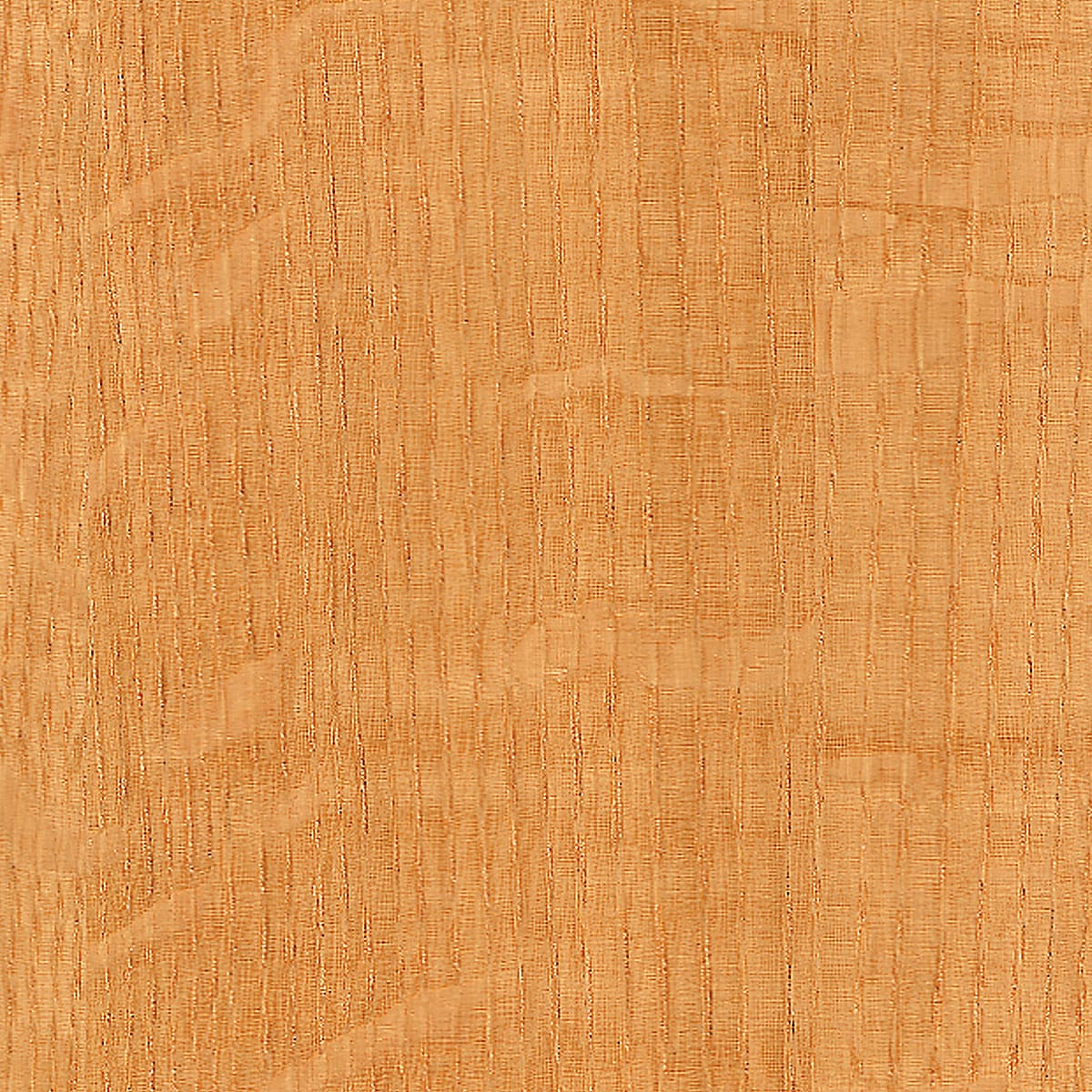
Veneer is sliced or peeled from a log in thin leaves, and the angle of the cut relative to the growth rings decides the grain pattern:
- Rotary cut: the log is turned against a blade, peeling a continuous sheet. It gives a bold, variable grain and is common on plywood faces and economical panels.
- Plain sliced (flat cut): the log is sliced parallel to its centre, giving the familiar cathedral pattern in the middle of each leaf with straighter grain at the edges.
- Quarter sliced: the cut runs roughly at right angles to the growth rings, giving straight, striped grain. In oak, it shows the flake or “ray fleck” that some designers love and others avoid.
- Rift cut: a cut at a slight angle off the quarter, about 15 degrees, used mainly for oak, which gives straight grain with little or no ray fleck. Rift white oak is widely used in commercial interiors.
The cut affects the price as well as the look. Rift and quarter cuts yield less veneer from each log, so they usually cost more than plain sliced.
Common species in commercial work
- White oak: a popular choice for warm, natural interiors, especially rift cut. Takes stains well and is available in many cuts.
- Red oak: more pink in tone and more open in grain than white oak, and usually less expensive.
- Walnut: rich dark brown with lighter sapwood. Popular for executive offices, hospitality and feature walls.
- Maple: pale and fine grained, often used where a clean, light look is wanted.
- Cherry: warm reddish tone that darkens noticeably with light over time.
- Ash: pale with a strong grain, similar in character to oak.
- Exotic and reconstituted veneers: species such as sapele, and engineered or reconstituted veneers made from fast-growing woods dyed and re-sliced to a consistent pattern. Reconstituted veneer gives very uniform colour and grain across large projects.
Colour change over time
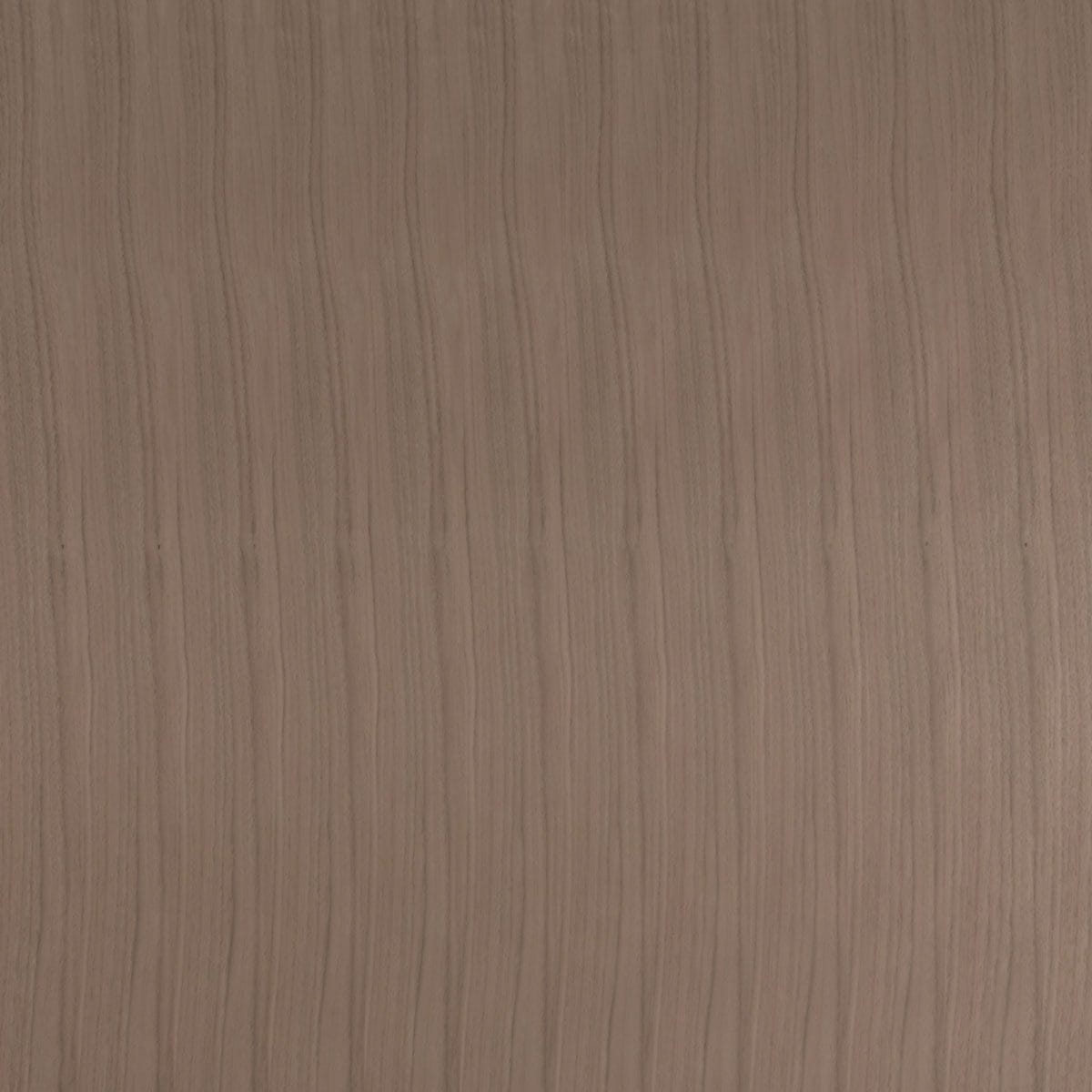
Wood changes colour with exposure to light and air. Cherry darkens, walnut tends to lighten, and maple and other pale woods tend to yellow. The change is greatest in the first months. Two consequences for commercial projects: approve samples knowing they will change, and avoid mixing new panels with old ones in the same run, since a replacement panel will not match an aged one at first. A finish with UV inhibitors can slow the change but not stop it. See our guide to wood finishing systems.
Matching and consistency
Within a panel, the way the leaves are arranged, such as book match, slip match or random match, changes the look as much as the species. Across a room, panels can be sequence-matched from the same flitch so the grain flows from one to the next, or blueprint-matched, where panels and doors are laid out to fit the specific wall. Our article on veneer matching explains the options. For large projects, ask how much veneer is needed from one flitch and whether the supplier can hold it for the whole job.
Natural variation
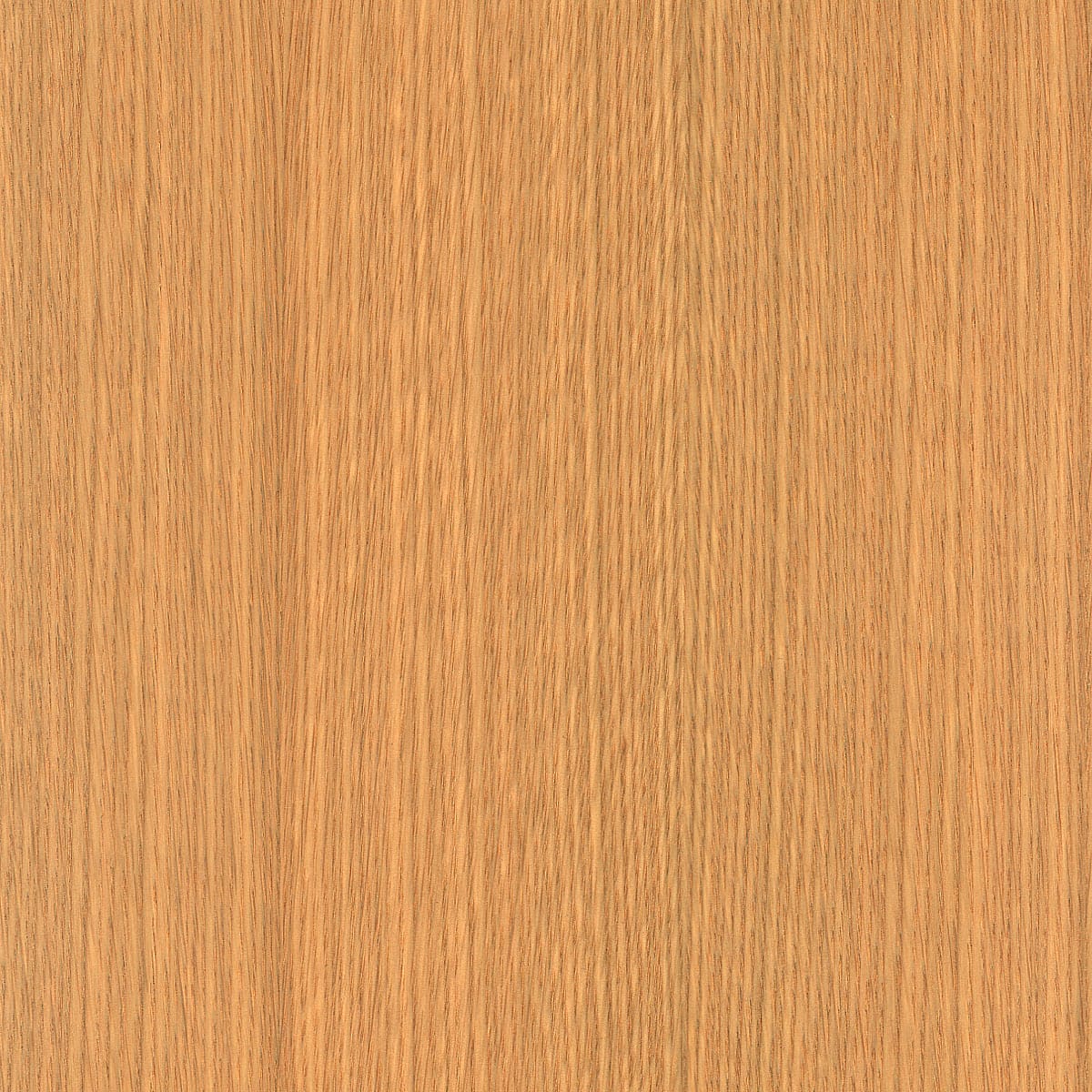
Real wood varies in colour and figure from log to log and even within a leaf: mineral streaks, colour variation between heartwood and sapwood, and small natural marks. Grading rules set how much is acceptable, and the architectural woodwork standards’ quality grades set expectations for matching and appearance. Agree what is acceptable with a control sample or range samples before production, rather than after installation. See our article on AWI quality grades.
Veneer or laminate?
Veneer is real wood and can be refinished, but it is softer than high-pressure laminate and more sensitive to water, heat and harsh cleaners. In high-wear areas such as transaction tops, kick bases and cabinet interiors, laminate, solid surface or a durable wood-look laminate may be the better choice, with veneer kept to the surfaces people see and touch less. Our comparison of laminate and veneer covers the trade-offs.
Sustainability
Veneer makes efficient use of valuable timber, since one log covers a large area. Where a project needs certified wood, specify FSC-certified veneer and core, and check that the millwork manufacturer holds FSC chain-of-custody certification, since an FSC claim on the finished millwork depends on it. See our article on sustainable millwork.
What to put in the specification
- Species and cut, such as rift white oak or plain sliced walnut.
- Leaf match within each panel, and panel match across each wall or run.
- Finish, sheen and any stain, approved on a sample.
- Edge treatment: matching veneer edges, solid wood edges or edgebanding.
- Quality grade and how variation will be judged.
- Certification requirements, if any.
Veneer millwork at DNS
We build veneer millwork in our Vaughan plant, with CNC cutting, edgebanding and finishing in-house. Our drafting team shows veneer layouts and matching on the shop drawings for review, and finish samples can be approved before production. See our veneer match visualizer and materials and finishes, or send us your drawings.
Frequently asked questions
What is the difference between rift cut and quarter sliced veneer?
Both give straight grain. Quarter sliced oak shows ray fleck, a flake-like figure, while rift cut is sliced at a slight angle to minimize it. Rift cut is used mainly for oak and usually costs more than plain sliced.
What is plain sliced veneer?
Veneer sliced parallel to the centre of the log, giving a cathedral grain pattern in the middle of each leaf with straighter grain at the edges. It is the most common and usually the least expensive sliced cut.
Does wood veneer change colour?
Yes. Cherry darkens, walnut tends to lighten, and pale woods such as maple tend to yellow with light exposure, mostly in the first months. Approve samples knowing they will change, and avoid mixing new and aged panels in one run.
What is reconstituted veneer?
Veneer made from fast-growing wood that is sliced, dyed, laminated into blocks and re-sliced to give a consistent, repeatable grain and colour. It suits large projects that need uniform panels.
Is veneer or laminate better for commercial millwork?
Veneer looks and feels like real wood and can be refinished; high-pressure laminate is harder and more resistant to water, heat and cleaners. Many projects use veneer on feature surfaces and laminate or solid surface in high-wear areas.