
Window displays are seen from a mall concourse or the street before a shopper reaches the door. They change more often than the fixtures inside, sit in strong sunlight, and have to look right from outside and, sometimes, from inside the store too. The fixtures that hold them, such as platforms, risers, backdrops and hanging systems, need to make those changes quick and keep the display looking sharp. Here is what to plan.
Open, closed or semi-closed windows
- Open windows let shoppers see straight into the store, with the display in front. They suit stores whose interior is part of the attraction.
- Closed windows have a full backdrop that separates the display from the store, like a stage. They give the most control over the scene and lighting.
- Semi-closed windows use partial backdrops, screens or panels that frame the display while keeping glimpses into the store.
The choice affects the fixtures: closed windows need a backdrop wall with access for staff, while open windows need low platforms that do not block the view inside.
Platforms, plinths and risers
Platforms raise the display above the floor so it reads from outside and keeps product away from cleaning. Risers and plinths of different heights create levels and focal points. They should be:
- strong enough for mannequins, heavy products and people stepping on them during changeovers, with reinforcement under the surface where mannequins are pinned or props are tied down;
- finished on every visible face, since windows are seen from several angles;
- modular, so they can be rearranged for each new display;
- easy to clean, with durable edges and tops; see edgebanding.
Backdrops and window backers
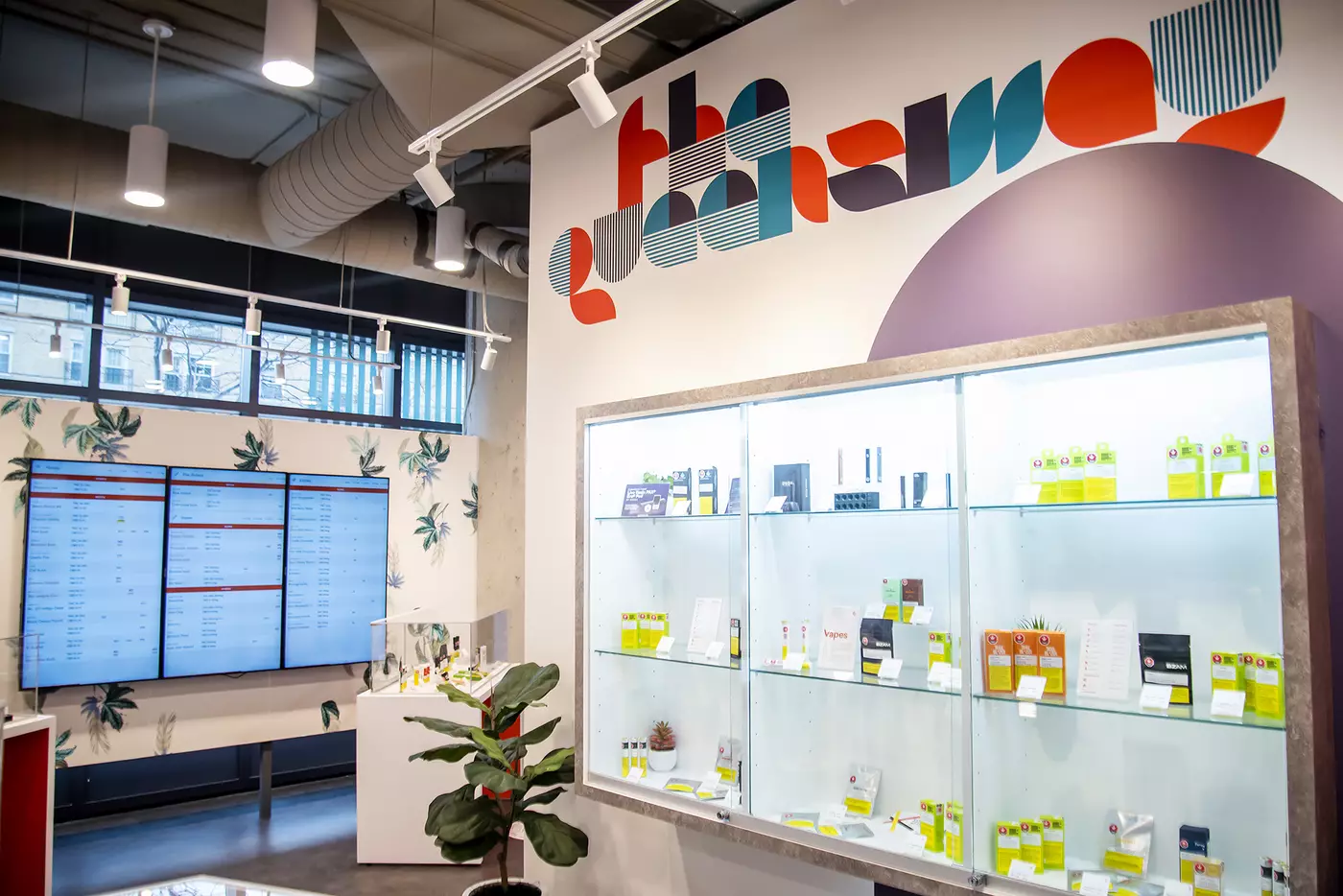
Backdrops can be painted or laminated panels, fabric frames, graphic panels or slatwall that takes brackets; see slatwall, gridwall and pegboard. Interchangeable graphic inserts let the window change with each campaign without rebuilding the backdrop. If the backdrop separates the window from the store, plan a door or removable panel so staff can get in, keep it from swinging into a corridor or exit route, and finish the store side too.
Hanging systems
Many windows hang graphics, products or props from above. A ceiling track, cable system or grid fixed to the structure gives flexible hanging points, but it has to be specified for the weight and fixed to solid structure, not just the ceiling finish. Keep the clearance below sprinkler heads that the sprinkler standard requires, and coordinate the system with lighting and any landlord ceiling rules.
Lighting
Window lighting has to compete with daylight during the day and carry the display at night. Adjustable track or spot lighting lets the light follow the display as it changes, and integrated lighting in platforms or backdrops adds depth. Avoid glare toward shoppers outside and reflections in the glass. Timers or controls keep the window lit after hours where the landlord allows it. Lit millwork is electrical equipment, so agree early with the electrical consultant how it will be approved and connected.
Sun, heat and fading
Windows facing the sun expose fixtures and products to heat and ultraviolet light. Wood finishes, some laminates, fabrics, graphics and packaging can fade or discolour over time. Ask the material suppliers for light-fastness ratings, such as the Blue Wool scale used for colour fastness, consider UV-filtering film on the glass with the landlord’s approval, rotate products, and choose finishes and graphics rated for the exposure. Very hot windows can also affect adhesives and veneers, so allow for movement and avoid placing dark, sealed boxes in direct sun.
Landlord and storefront rules
Shopping centres often have rules for storefront windows: how much of the glazing can be covered, signage limits, lighting hours, what is visible from the concourse, and sometimes a setback for displays from the glass or lease line. Check the tenant criteria before designing a closed window or large graphics.
Changeovers
Windows change with seasons, campaigns and launches, often overnight. Fixtures that are light enough to move, connect without tools, and store flat between uses make changeovers faster. For chains, a standard window kit per store, with a layout sheet for each campaign, keeps windows consistent from store to store; see our guide to shipping fixtures for rollouts.
What to give your fixture manufacturer
- Window dimensions, glazing height, ceiling and floor details, and access.
- Window type: open, closed or semi-closed.
- Products, mannequins and props the fixtures must carry, with weights.
- Lighting and power requirements.
- How often the display changes and who changes it.
- Landlord storefront criteria.
Window fixtures at DNS
We build window platforms, plinths, backdrops and display fixtures in our Vaughan plant, with CNC cutting and finishing in-house, LED integration coordinated to project requirements and jurisdiction, and partners for metal and glass. Our drafting team issues shop drawings for review before production, and we kit fixtures by store for multi-store programs. See our visual merchandising fixtures guide, or send us your window plans.
Frequently asked questions
What fixtures are used in retail window displays?
Platforms, plinths and risers to raise and layer the display, backdrops or window backers, hanging systems for graphics and products, and lighting. Modular fixtures make it easier to change the display.
What is the difference between open and closed window displays?
An open window lets shoppers see into the store behind the display, while a closed window has a full backdrop that separates the display from the store, giving more control over the scene and lighting.
How do you stop products fading in a store window?
Choose finishes, graphics and materials rated for light exposure, consider UV-filtering film on the glass, and rotate products regularly, especially in windows that face the sun.
How should window display lighting be designed?
With adjustable lighting that can follow the display as it changes, strong enough to compete with daylight, aimed to avoid glare and reflections in the glass. Lit fixtures must be approved before connection in Ontario.
Do shopping centres have rules for store windows?
Often, yes. Tenant criteria can limit how much glazing is covered, signage, lighting hours and what is visible from the concourse, so check them before designing large backdrops or graphics.